
Potala Palace: History, Culture & Visiting Guide
- Catherine
- Last Updated : 03/10/2026
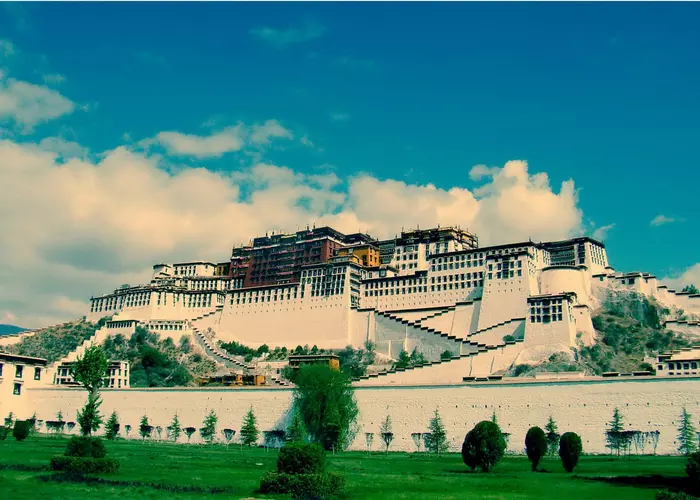
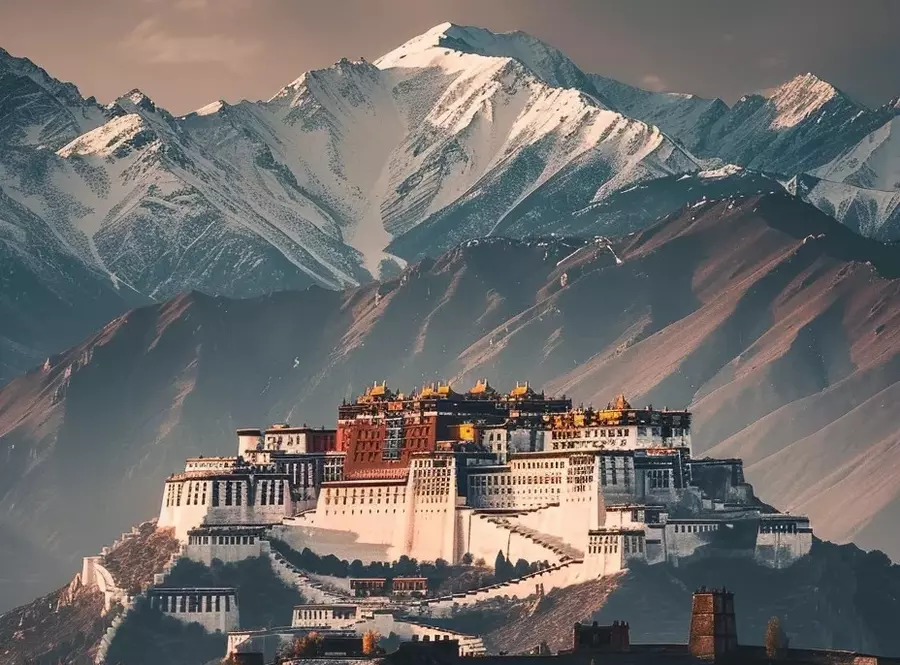
Potala Palace (Chinese name 布达拉宫) is an ancient palace located in Lhasa, Tibet, China. It was once the residence of the Dalai Lamas and the center of the Tibetan government. Today, the palace is a UNESCO World Cultural Heritage site and a must-visit landmark for travelers to Tibet. Read on to discover more fascinating Potala Palace facts.
Potala Palace Quick Facts
- Location: Lhasa, Tibet, China
- Altitude: 3,700 m (12,139 ft)
- Built: 7th century (expanded in the 17th century)
- Founder: Songtsen Gampo
- Height: 117 m (13 stories)
- Total Rooms: Over 1,000
- UNESCO Status: World Heritage Site since 1994
- Main Sections: White Palace and Red Palace
Significance and Cultural Importance
The Potala Palace, standing 117 meters high on Red Hill (Mabri Mountain) in central Lhasa, has been both a religious and political center for centuries. For Tibetan Buddhists, Red Hill is sacred, likened to Mount Putuo where Guanyin Bodhisattva resides, which is why the palace is called Potala (Sanskrit: Putuo). From 1645 to 1959, it served as the winter residence of the Dalai Lamas and the seat of Tibetan government, housing the holy stupas of eight Dalai Lamas.
Beyond its religious and political role, the palace is an architectural masterpiece, comprising the White Palace and Red Palace, with walls up to 5 meters thick. Its rich collections of historical relics, Buddhist scriptures, and cultural artifacts make it invaluable for understanding Tibet’s history, politics, and spiritual traditions.
How to Get To Potala Palace in Lhasa?
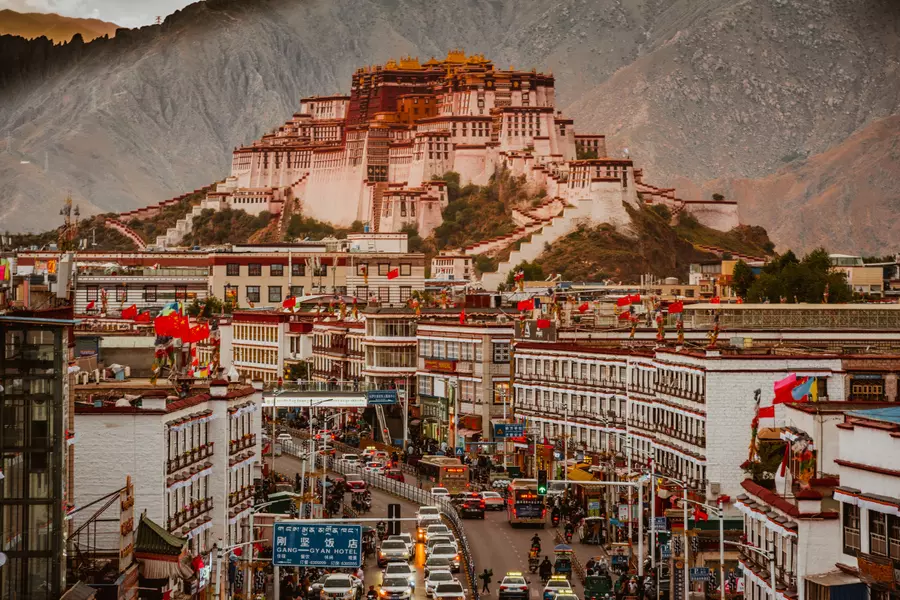
The Potala Palace stands on Beijing Road in the heart of Lhasa. Many well-known attractions are located nearby, including Norbulingka, the Tibet Museum, Chakpori Hill, Jokhang Temple, and Barkhor Street. Restaurants, cafés, and hotels are also concentrated in this area, making the palace easy to reach from almost anywhere in the city.
Taxis are widely available in Lhasa and are usually the most convenient way to reach the Potala Palace. Several public bus routes also stop at the Potala Palace Square. If you are staying in the city center, walking is also a pleasant option.
From Lhasa Gonggar Airport
Lhasa Gonggar Airport is about 60 km from downtown Lhasa.
- Airport Bus: about 1.5 hours, fare around CNY 30. The bus stops near the city center, about a 5-minute walk from the Potala Palace.
- Taxi: about 1 hour, fare roughly CNY 200.
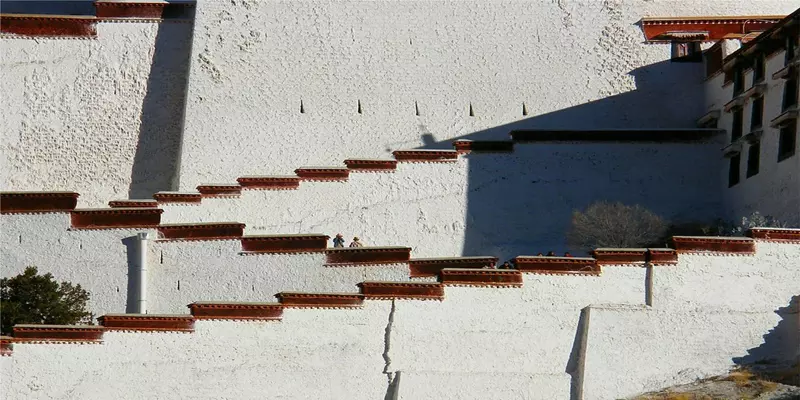
Tip: It is best not to visit the Potala Palace immediately after arriving in Lhasa. With 1,000 steps leading to its 13-story summit, resting the first night helps your body adjust to the high altitude.
From Lhasa Railway Station
Lhasa Railway Station is about 9 km from the Potala Palace.
- Taxi: about 25 minutes, around CNY 30.
From Major Attractions
- Jokhang Temple: about 2 km east of the Potala Palace. Taxi about 10 minutes, or around 20 minutes on foot.
- Barkhor Street: about 1.7–2 km away. Walking takes around 25 minutes.
- Norbulingka: about 3.5 km west of the Potala Palace. Taxi takes about 15 minutes.
How to Visit Potala Palace?
Visits to the Potala Palace require advance reservation with real-name registration, and same-day tickets are not available. International travelers usually need to arrange their visit through a Tibet travel agency at least 10 days in advance, as reservations must be made using passport details.
Visitors are required to arrive 60 minutes early to pass the security check before entering the palace complex. During the inspection, foreign travelers must present the original Tibet Travel Permit along with their passport. Entry is allowed only within the designated time slot shown on the reservation.
Inside the palace, the visiting route is strictly managed and the tour normally lasts about one hour for the core area.
When visiting the palace, please respect local customs and regulations:
- Remove hats when entering the palace.
- Short skirts or overly revealing clothing are not recommended.
- Photography is not allowed inside the palace halls.
- When entering the White Palace, step over the threshold rather than stepping on it, as Tibetan tradition regards this as leaving misfortune outside the door.
After the visit, visitors exit from the north gate of the Red Palace and follow the descending walkway to the foot of the hill, arriving at Zongjiao Lukang Park, located just north of the Potala Palace.
Best Places to Take Photos
Chakpori Hill
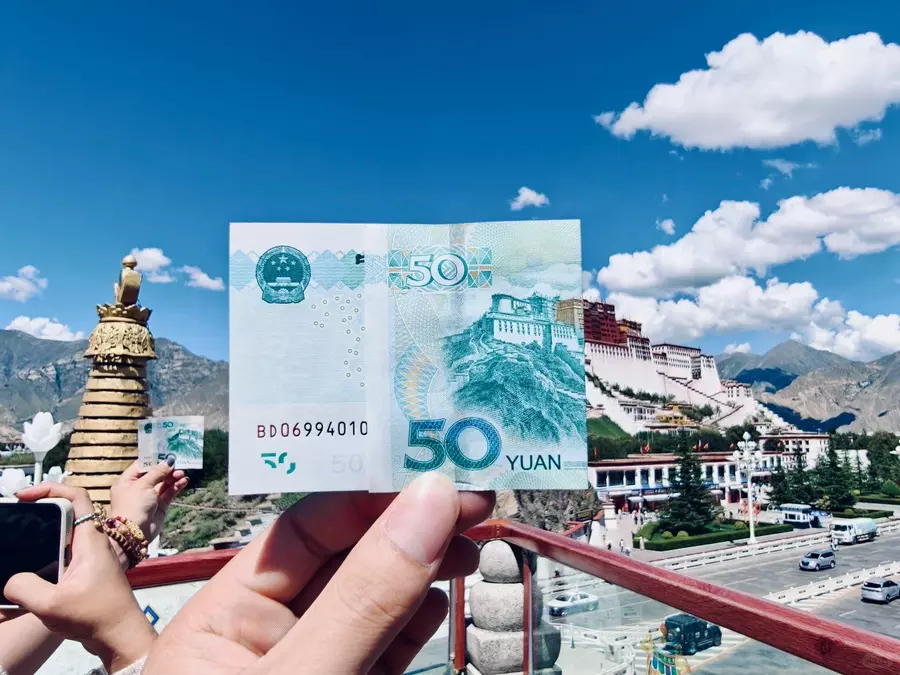
Located on the southwest corner of the Potala Palace, just 600 meters away, Chakpori Hill offers one of the best viewpoints of the palace. The view from the Chakpori Observation Deck perfectly matches the image depicted on the back of the 50 RMB note. However, this spot tends to be crowded. To avoid the crowds, you can also capture the Potala Palace from Lupuyansi Temple, situated halfway up the eastern slope of Yaowangshan. A ticket costs 20 RMB.
Potala Palace Square
This is a great place to shoot the night scene of Potala Palace. After eight o'clock in the evening, there will be landscape lighting. But during the off-season, the landscape lights are only partially on.
Artificial lake at the Potala Palace Square
There is a small pool at the Potala Palace Square, which is a good place to photograph the reflections in the water of the Potala Palace.
Zongjiao Lukang Park
This park is just behind the Potala Palace. It is a great place to photograph the back and the reflections of the palace. The park is beautiful as well. No tickets are required!
Pabonka Hermitage
Pabonka is about 8 kilometers north of the Potala Palace. It is located on a hillside. Opening hours are 09:00 – 17:00. Free of charge.
Nanshan Park
It is located 2km away from the Potala Palace but just south of it. Here is the best location to photograph the Potala Palace and the majestic mountains behind it from a distance. Especially after the snow in winter, the mountains are covered by white ice and snow, and the red and white Potala Palace is particularly beautiful under the pure white background. It is also the best location to overlook the city of Lhasa. The only downside is that climbing the mountain is a bit tiring! No admission fee.
Princess Wencheng Drama’s Outfield
It is on the south bank of the Lhasa River and looks north to the Potala Palace.
Conclusion
The Potala Palace is not only the most famous landmark in Tibet but also a symbol of Tibetan history, religion, and culture. Rising above the city of Lhasa on Red Mountain, the palace reflects centuries of Tibetan architecture and spiritual tradition. For travelers visiting Tibet, exploring the Potala Palace is an unforgettable experience and an essential part of any journey to Lhasa.
Email response within 0.5~24 hours.